
The Exodus Wilderness Tabernacle
.
What if the Wilderness Tabernacle was never meant to be a rectangular tent?
Project Arc investigates whether the construction instructions in Exodus describe a nonlinear, circumferential architecture.
God repeatedly commanded Moses to build the Tabernacle according to the pattern shown on the mountain.
Exodus 26 carefully records the curtain dimensions, joining sequence, blue loops, coverings, and assembly instructions.
Could those details reveal a different geometry?
Could biblical length and width, in certain contexts, describe a diameter and radius rather than the sides of a rectangle?
What if the pattern has been hidden in plain sight all along?


The Wilderness Tabernacle is presented here as a six-story, yurt-like structure derived from the biblical measurements, construction sequence, and architectural context of Exodus.
1. The investigation begins with Exodus 26:1–6, where the woven curtains are joined from one end (miqqāṣāh, מִקָּצָה) to the outermost edge (haqqîṣônāh, הַקִּיצוֹנָה) by four-cubit ends connected with fifty blue loops and fifty gold clasps.
2. Traditional reconstructions generally depict a rectangular Tabernacle within a 50 × 100-cubit courtyard. Project Arc investigates whether Exodus 26:7–13 instead describes a 314-cubit circumference with a 50-cubit radius and a 100-cubit diameter, allowing biblical length and width, in their immediate context, to function as circumferential measurements rather than the sides of a rectangle.
Every instruction in Exodus 26–27 is then examined within that same construction sequence before any architectural conclusions are drawn.
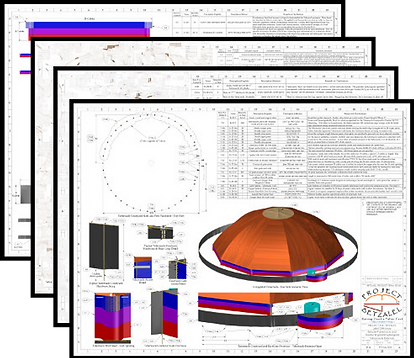
In 2014, mechanical engineer Andrew L. Hoy rediscovered what is believed to be the accurate architecture of the Exodus Wilderness Tabernacle through a careful study of the biblical text. His book,
The House of El Shaddai,
inspired my own investigation into biblical architecture and ultimately led to the creation of Project Arc.
Let's begin from the start in Exodus 26:1-6.
This illustration represents one of the ten curtains described in Exodus 26:1–6. Each curtain measured 28 cubits long and 4 cubits wide, forming a long, narrow linen panel woven on a loom before being joined to the others into a single unified covering.
The fifty blue loops were attached along the upper portion of the 4-cubit ends—the shorter cut edges of each curtain—not along the 28-cubit woven (selvage) edges.
In this reconstruction, the curtains are understood to stand upright, forming the walls of the Wilderness Tabernacle.


Exodus 26:1-6
1 `And thou dost make the tabernacle: ten curtains of twined linen, and blue, and purple, and scarlet; [with] cherubs, work of a designer, thou dost make them;
-
10 blue, purple & red linen curtains with cherubim sewn on that make the Tabernacle
2 the length of the one curtain [is] eight and twenty by the cubit, and the breadth of the one curtain four by the cubit, one measure [is] to all the curtains;
-
10 curtains are 28 by 4 cubits
3 five of the curtains are joining one unto another, and five curtains are joining one to another.
-
10 curtains are divided into two sets of 5 curtains to be coupled
4 `And thou hast made LOOPS OF BLUE upon the EDGE of the one curtain, at the END in the joining; and so thou makest in the EDGE of the OUTERMOST curtain, in the joining of the second.
-
The curtains are joined together as one by their 4-cubit EDGE, END, OUTERMOST using the BLUE LOOPS, NOT red loops.
-
4-cubit EDGE-END מִקָּצָ֖ה
-
4-cubit EDGE-OUTERMOST הַקִּ֣יצוֹנָ֔ה
-
NOT the 28-cubit edges
-
4-cubit end-to-end curtains look like these lines ---------------------------
-
The box Tabernacle curtains join the 28-cubit side-by- side and look like these lines |||||||||||||||||||||||||||||||||||||
-
See the difference?
-
And gives us the curtain color "pattern" Ex. 25:40
5 fifty loops thou dost make in the one curtain, and fifty loops thou dost make in the EDGE of the curtain which [is] in the joining of the second, causing the loops to take hold one unto another;
-
50 loops at each end בִּקְצֵ֣ה of each curtain join together to be one with another curtain's 50 loops
6 and thou hast made fifty hooks of gold and hast joined the curtains one to another by the hooks, and the tabernacle hath been one.
-
50 gold hooks finish the joining the curtains together to become one makes the Tabernacle


Notice the difference.
Compare the traditional rectangular reconstruction with the construction instructions recorded in Exodus 26.
Where do the fifty blue loops fit?
Where is the joining sequence described in the text?
Exodus records all ten curtains being joined into one by their 4-cubit ends—from one end (miqqāṣāh) to the outermost edge (haqqîṣônāh)—using fifty blue loops and fifty gold clasps.
The instructions do not describe joining the curtains along their 28-cubit woven (selvage) edges.
Does the traditional reconstruction fully account for the construction sequence recorded in Exodus?
Or could the curtain mechanics themselves be pointing to a different architectural design?


Hebrew & English
Exodus 26:4 - 4-cubit
שְׂפַ֤ת - edge
מִקָּצָ֖ה - edge END
בִּשְׂפַ֣ת - edge
הַקִּ֣יצוֹנָ֔ה -edge OUTERMOST
Exodus 26:4a
מִקָּצָ֖ה = from end ✅
מִקָּצָ֖ה = selvedge ❌
Selvedge is a textile term for the tightly woven edge of fabric that
prevents unraveling and fraying; it's NOT a synonym for "end." "End" and "selvedge" are different words that mean different things.
Young's Literal Translation ✅✅ END
Ex. 26:4 `And thou hast made loops of blue end, outermost, warp upon the edge of the one curtain, at the -END- in the joining;
PERFECT PLACEMENT, PERFECT WORD
English Standard Version ✅ ? OUTERMOST
Ex. 26:4 And you shall make loops of blue on the edge of the -OUTERMOST- curtain in the first set.
PERFECT PLACEMENT, NOT THE PERFECT WORD
Ex. 26:4 You shall make loops of blue on the edge of the one curtain from the -EDGE- in the coupling;
TOO AMBIGUOUS, WHAT EDGES?
Douay-Rheims Catholic Bible ❌ ? SIDES
Ex. 26:4 Thou shalt make loops of violet in the -SIDES-
King James Version ❌❌ SELVEDGE
Ex. 26:4 And thou shalt make loops of blue upon the edge of the one curtain from the -SELVEDGE- in the coupling;
WRONG PLACEMENT, WRONG WORD ADDED

miq·qā·ṣāh = END
Exodus 25:19
KJV: one cherub on the one ✅END✅, and the other cherub on the other ✅END✅
YLT: one cherub at the ✅END✅ on this side, and one cherub at the ✅END✅
NASB: one cherub at the ✅END✅ on this side, and one cherub at the ✅END✅
Exodus 26:4
YLT: at the ✅END✅ in the joining
NASB: [f]outermost curtain in the first set, and likewise ✅from the end✅
KJV: curtain from the ❌SELVEDGE❌ in the coupling
Exodus 36:11
KJV: curtain from the ❌SELVEDGE❌ in the coupling
NASB: of the [ac]outermost curtain in the first one curtain ✅from the end✅
Exodus 37:8
KJV: One cherub on the ✅END✅ on this side, and another cherub on the other ✅END✅
YLT: one cherub at the ✅END✅ on this [side], and one cherub at the ✅END✅
NASB: one cherub at the one ✅END✅ and one cherub at the other ✅END✅
Why do some translations add the textile term "selvedge" when the Hebrew word simply means "end"—that single choice influences how the Tabernacle's joining pattern is understood.

Quiz: Exodus 26:1–6 and the Tabernacle Curtains
1. Were the Exodus 26:1–6 curtains connected with gold or silver hooks?
A. Gold
B. Silver
2. What is the best translation for מִקָּצָה?
A. From side
B. From edge
C. From end
D. From selvedge
3. What term refers to the set of long, parallel threads that run lengthwise on a loom, forming the foundation and structure stretched taut between the loom beams?
A. Warp
B. Selvedge
4. The Exodus 26:1–6 curtains are first divided into two sets of five and then joined back together as one unit.
A. True
B. False
5. How many of the ten-curtain blue-loop ends in Exodus 26:1–6 join together with the loops of the other set?
A. Zero
B. Nine
C. Ten
D. Eight
6. What structural design is generally best for a camping tent?
A. A box tent
B. A dome tent
7. Which statement is accurate according to Exodus 26:1–6?
A. The individual curtains measure 4 cubits by 30 cubits.
B. The individual curtains measure 4 cubits by 28 cubits.
8. The Exodus 26:1–6 curtains are described as blue, purple, and green.
A. True
B. False
9. Each curtain in Exodus 26:1–6 has four edges: two uncut 28-cubit edges (selvedges) and two 4-cubit cut ends (warp ends).
A. True
B. False
10. Which passage starts the sequential “pattern” referenced in Exodus 25:9, 40?
A. Exodus 26:1–6
B. Exodus 27:18
1.A 2.C 3.A 4.A 5.C 6.A 7.B 8.B 9.A 10.B

Exodus 26:10 "Outermost"
שְׂפַ֤ת - edge
הַקִּיצֹנָ֖ה - OUTERMOST
שְׂפַ֣ת - edge
THE PI PATTERN IN EXODUS
According to the traditional early chronology of the Exodus, Moses received the Tabernacle instructions at Mount Sinai during the fifteenth century BC.
Project Arc investigates whether Exodus 26:7–13 and Exodus 27:18 preserve a circumferential pattern remarkably close to pi.
A) A Proposed Pi Pattern from Exodus 26:7–13
Eleven goat-hair curtains measured 30 cubits each:
11 × 30 = 330 cubits
Project Arc understands the folded sixth curtain to reduce the extended measurement by 15 cubits, with the additional one-cubit allowance described in verse 13 reducing it by another cubit:
330 − 15 − 1 = 314 cubits
Under this reconstruction, the resulting measurement represents a proposed 314-cubit circumference.
B) A Proposed Pi Pattern from Exodus 27:18
If the courtyard measurement of 100 cubits is understood as its diameter, then:
π = Circumference ÷ Diameter
314 ÷ 100 = 3.14
This differs from the modern value of π (3.14159...) by approximately 0.05%.
The same relationship may also be expressed using the 50-cubit radius:
314 ÷ 50 = 6.28 ≈ 2π
Pi (π ≈ 3.14159) governs the relationship between a circle's circumference and diameter.
For nearly two millennia, many reconstructions of the Tabernacle have followed the historical description of Flavius Josephus. Project Arc asks whether that tradition has influenced how later generations have visualized the biblical text.
Sometimes width is simply width.
In another architectural context, it may function as a radius or diameter.
The measurements do not change.
Context determines how they function.


≈ 13,000 sq ft inside tent, 60 ft high
≈ 750 sq ft inside tent, 15 ft high
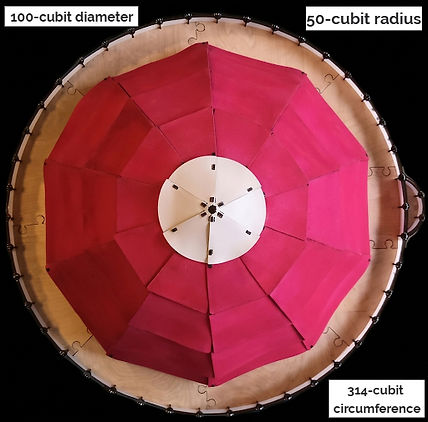

EXODUS 26:14 — THE COVERING ABOVE THE TENT
"And thou shalt make a covering for the tent of rams' skins dyed red, and a covering above of tachash skins." (Exodus 26:14)
Project Arc questions the traditional translation of תְּחָשׁ (tachash) as "badger." The precise identity of the tachash remains uncertain, and scholars have proposed several possibilities over the centuries. Martin Luther's German translation (Dachs, "badger") helped popularize that rendering, which later appeared in several subsequent translations.
That uncertainty matters.
The Holy of Holies was the most sacred place within Israel's sanctuary. Throughout the Tabernacle, the materials emphasize holiness, purity, and consecration. If tachash referred to an unclean animal, some readers may question how that choice fits the broader theological and ceremonial context.
This question becomes especially striking when contrasted with the desecration of the Temple in 167 BC, when Antiochus IV Epiphanes defiled the sanctuary by offering an unclean animal upon the altar.
Project Arc therefore treats "badger skins" as one possible translation rather than a settled conclusion and encourages readers to reexamine the evidence within its biblical and historical context.
If the Tabernacle was nonlinear or dome-like, how should its outer covering be measured?
Context is King.

The construction instructions recorded in Exodus 26:15–37 continue the architectural blueprint of the Wilderness Tabernacle. Each measurement, material, and assembly detail is examined within its immediate biblical context before architectural conclusions are drawn.
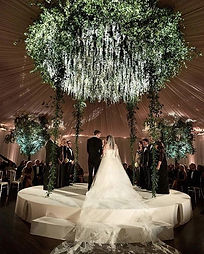
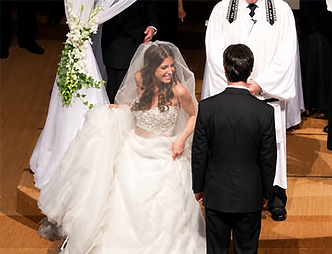

In Jewish wedding tradition, the bride circles the groom in a ceremony known as hakafot (הַקָּפוֹת). Traditionally circling him seven times, she symbolizes the establishment of a new household, a covenant relationship, and the beginning of a new life together. In Jewish thought, the number seven is closely associated with completeness, wholeness, and covenant fulfillment.
While this later tradition does not interpret the Wilderness Tabernacle, it illustrates how circular movement and surrounding imagery have long carried symbolic meaning within Jewish culture.
Exodus 26 Side Rib
צֵלָע, tsêlâa rib (as curved), literally (of the body)
Adam's rib and the construction of the tabernacle, the word "tsela" is used to describe the sides/rib of the structure. Daniel 7:5, the second beast is described as having "three rib in its mouth between its teeth" among other examples.
Corners Bending
Ex. 26:23-24 מְקֻצְעָה Word Origin: [from H7106 (קָצַע - To end) From qatsa' in the denominative sense of bending
18 side/rib
20 side/rib, side/rib
22 sides/rib
26 side/rib
27 side/rib, sides/rib
35 side/rib, side/rib
23 corners
24 two corners, head unto the one ring
Side To Edge
"to edge south (and) towards the right"
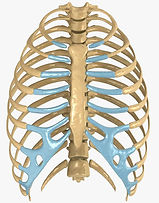


Temple of Edfu (237–57 BC): A temple dedicated to Horus, used for worship and depicts priests carrying ribs in ritual ceremonies.
Exodus 27:1-8


_edited_edited.jpg)

WIDTH-QUARTERED
Project Arc asks whether the biblical term traditionally translated "foursquare" deserves renewed examination within its original Hebrew context.
In Exodus 27:1–8, the Altar of Sacrifice is described by the Hebrew word רָבוּעַ (rābûaʿ), commonly translated "foursquare." Project Arc investigates whether, in its architectural context, the term may describe something quartered or divided into four equal parts rather than requiring a strictly square form.
If so, a circular or hemispherical altar divided into four equal sections would still satisfy the concept of being width-quartered while also providing practical advantages for airflow, heat distribution, and structural continuity.
This raises a broader question.
If rābûaʿ in Exodus may describe a quartered arrangement rather than a specific geometry, should the term automatically be understood as a square or cube wherever it appears?
Applied to Revelation 21:16, Project Arc asks whether "the city lieth foursquare" could describe a city organized into four equal quarters extending from a central point and aligned with the four cardinal directions.
If the city expands equally in every direction, where would the measuring reed begin?
At one corner—
or at the center, measuring outward equally into the four quarters?
The measurements remain the same.
The geometry is reconsidered.
Context determines geometry—not the word alone.

PRACTICAL CONSIDERATIONS
Beyond geometry, the sacrificial system raises practical questions of logistics, sanitation, engineering, and crowd movement.
Thousands of sacrifices required the continual management of blood, ashes, carcasses, hides, fat, smoke, and ceremonial cleanliness. Exodus 27:1–8 describes the Altar of Sacrifice as a hollow structure of acacia wood overlaid with bronze. Project Arc asks whether its measurements and construction support a circumferential interpretation within the context of Exodus 26–27.
Traditional Interior Rectangular Altar
-
Sacrificial activity centered within the courtyard.
-
Continual removal of ashes, hides, bones, and carcasses.
-
Increased congestion around the altar.
-
Access primarily from four sides.
Proposed Exterior Circumferential Altar
-
Sacrificial activity located outside the primary worship area.
-
Greater separation between sacrifice and worship.
-
Potential improvements in sanitation, airflow, and crowd movement.
-
Full 360-degree accessibility.
Project Arc does not argue that practicality alone determines biblical architecture. Rather, it asks whether a circumferential altar may better accommodate the continual demands of sacrifice while preserving cleanliness, order, and reverence.
Which design best fulfills the purpose described in Scripture?
Exodus 27:9-21
9 `And thou hast made the court of the tabernacle: for the south side/to edge southward, hangings
for the court of twined linen, a hundred by the cubit [is] the length for the one side/edge,
10 and its twenty pillars and their twenty sockets [are] of brass, the pegs of the pillars and
their fillets [are] of silver;
11 and so for the north side/edge in length, hangings of a hundred [cubits] in length, and its
twenty pillars and their twenty sockets [are] of brass, the pegs of the pillars and their fillets
[are] of silver.
12 `And [for] the breadth of the court at the west side/edge [are] hangings of fifty cubits, their
pillars ten, and their sockets ten.
13 And [for] the breadth of the court at the east side/to edge, eastward, [are] fifty cubits.
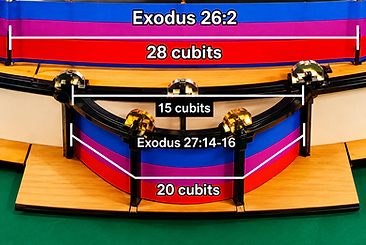
14 And the hangings at the side/shoulder [are] fifteen cubits, their pillars three, and their sockets three.
15 And at the second side/shoulder [are] hangings fifteen [cubits], their pillars three, and their sockets three.
16 `And for the gate of the court a covering of twenty cubits, blue, and purple, and scarlet, and
twined linen, work of an embroiderer; their pillars four, their sockets four.
"to edge south (and) towards the right"
לִמְקֻצְעֹ֖ת
Yes, תֵּמָן (Tēman) biiblical Hebrew means "South" or "to the right," derived from the root meaning "right hand," because facing east (the rising sun).
Exodus 27:17-19
17 All the pillars of the court round about [are] filleted [with] silver, their pegs [are] silver, and their sockets brass.
18 `The length of the court [is] a hundred by the cubit, the breadth is 50 by 50 (KJV "50 everywhere"), and the height 5 cubits.", of twined linen, and their sockets [are] brass,
19 even all the vessels of the tabernacle, in all its service, and all its pins, and all the pins of the court, [are] brass.
Exodus 27:18
"width 50 in/by 50" or "width 50 tenting 50," 50 wide from the center is radius ורחב חמשים בחמשים "And fifty by fifty wide"
50-cubit radius... expand
H7341 "expanse," root: H7337 רָחַב which means to be or grow wide, (50 by 50 ) expanse
H7572 בַּחֲמִשִּׁים "by/in/with fifty," plural form "by fifties," 50 by 50-cubit radius
NASB
Ex. 27:18 "...width 50 throughout..."
KJV, ASV
Ex. 27:18 "...breadth 50 everywhere..."
The Tabernacle's 314-cubit circumference (Ex.26:7-13) of Pi π has a 50-cubit radius and a 100-cubit diameter. See the mistake?
It's NOT a 100 cubits long & 50 cubits wide rectangle.
Exodus 27:20–21
Statues were presented for Israel's future generations, and olive oil was provided to keep the candles burning overnight.
THE SILVER CONSTRAINT
The Tabernacle used a fixed amount of silver—100 talents and 1,775 shekels (Exodus 38:25–28), approximately 7,500 pounds. Every reconstruction must account for that weight.
Project Arc investigates whether traditional reconstructions best accommodate the biblical weight, portability, and construction details—or whether some silver components functioned as smaller structural connectors rather than massive foundation elements.
Engineering begins with constraints.
The silver tests the design.


≈ 75 lbs. of silver

The Cloud and the Fire
The cloud by day and the fire by night introduce practical environmental considerations.
Moisture.
Ventilation.
Heat.
Wind.
Weather.
The structure had to endure them all.
Which reconstruction best manages those conditions?
The Altar
The continual sacrificial system required efficient movement, sanitation, heat management, and crowd flow.
The altar's location and geometry directly affect each of those practical considerations.
Which reconstruction best serves the function described in Scripture?


_edited.jpg)

JOSEPHUS' HISTORIC RECONSTRUCTION
In Antiquities of the Jews (Book 3, Chapter 6), Josephus begins his reconstruction with Exodus 26:30 rather than the earlier construction sequence of Exodus 26:1–29, where the curtain pattern, blue loops, and joining instructions are first established. He then proceeds to Exodus 27:18, producing a reconstruction independent of that earlier assembly sequence.
Describing the Tabernacle as "quadrangular," Josephus appears to interpret it as a rectangular structure. Project Arc asks whether that interpretation fully accounts for Exodus 26:7–13, where the curtain calculations may describe an approximate 314-cubit circumference.
Exodus 27:18 states that the "breadth [was] fifty everywhere." Could this preserve a radial, circumferential design rather than a rectangular one?
If the biblical construction sequence guides the reconstruction, Josephus' influential interpretation deserves renewed examination.

.jpg)
Taking a word or phrase out of context is called contextomy, or biblically, eisegesis—reading assumptions or traditions into a text instead of allowing its context and sequence to determine its meaning.
In Antiquities of the Jews (94 AD), Josephus wrote:
"Moses... measured the open court, 50 cubits wide and 100 long." ❌
This reflects a later rectangular interpretation. Yet Exodus 26:1–13 establishes the architectural pattern before Exodus 27:18 describes the surrounding court. By beginning with the court rather than the construction sequence, Josephus may have interpreted the Tabernacle through a later Greco-Roman rectangular lens.
Project Arc instead follows the biblical sequence, where Exodus 26:7–13 forms an approximate 314-cubit circumference, and Exodus 27:18 is interpreted within that established pattern.
Context determines meaning. When the sequence changes, the pattern changes.


Context matters.
A simple question:
Would you rather go camping
in a flat-roofed tent or a dome tent?
That's context.
Function helps determine architecture.
Chronological Timeline
1440 BC — Moses receives the pattern of the Wilderness Tabernacle on Mount Sinai
1406 BC — Moses dies; the Hebrews enter the Promised Land
1010 BC — King Saul's reign begins in Israel
957 BC — Solomon's Temple is completed
931 BC — Israel divides into two kingdoms
720 BC — The Northern Kingdom is destroyed
586 BC — The Southern Kingdom is destroyed; the First Temple falls
420 BC — The Intertestamental Period begins
3 BC — Christ is born
30 AD — Christ is crucified and resurrected
30 AD — Pentecost
70 AD / 3830 AM — The Second Temple is destroyed
325 AD — Constantine convenes the Council of Nicaea
1517 AD — The Protestant Reformation begins
1947 AD — The Dead Sea Scrolls are discovered
2014 AD — The Wilderness Tabernacle blueprint framework is identified within the Exodus text by Project314.org


For a more detailed study of the Wilderness Tabernacle's geometry, Hebrew text, textile mechanics, engineering, and construction sequence, see
The House of El Shaddai by mechanical engineer Andrew L. Hoy.
The book explores the curtain sequence, blue loops, structural mechanics, circumferential geometry, transport logistics, and how later historical assumptions may have influenced modern reconstructions.
Amazon Books
Project 314 The House of El Shaddai: God's Dwelling Place Reconsidered
Ancient Hebrew Research Center
The Tabernacle: An Ancient Journey with the Ancient Hebrew Language | AHRC
The Christian Times
Tabernacle in Bible was circular not rectangular, says Bible-loving engineer


Scripture places the Tabernacle at the center of Israel's camp (Numbers 2; 3:38; 4). In his Notes on Amos, Albert Barnes records the historical tradition that Israel camped in a circle, Babylon in a square, and Assyria in an oval formation. Greek and Roman military camps likewise became known for their square and rectangular layouts.
Project Arc asks whether these differing camp patterns may also reflect differing architectural traditions and ways of organizing sacred and civic space.
≈ 13,000 sq ft inside tent
≈ 750 sq ft inside tent


Biblical Measurements.
Biblical Measurements.
Contextual Architecture.